
Ask three questions. Will your soil hold water? Where will the water come from? And where does it go in a flood? The best of the pond excavation contractors you call will answer all three before the first scoop. If a bidder skips them, keep looking.
Why those three? Because most failed ponds trace back to one of them.
Will Your Soil Hold Water?
Clay decides. Extension specialists at Mississippi State say a pond site needs at least 20 percent clay to hold water, and they recommend taking soil borings at several spots to check. You can run a rough field test yourself. Squeeze a handful of moist soil into a ball. If it holds its shape, you have promising clay. If it crumbles, expect trouble.
Sandy or gravelly ground leaks. Period. But you have options, including compacted clay, bentonite, or a liner. Wright Construction installs liners where soil calls for one, and that call should come from testing, not guessing.
Where Does the Water Come From and Go?
A pond needs a watershed big enough to fill it and a spillway strong enough to handle overflow. Too little runoff and you get a mud hole in August. Too much and the dam takes a beating in spring storms. So smart contractors study the slope above the pond and plan a safe exit for extra water.
A seasoned excavating contractor in Hill County, TX also studies the ground around the pond, because location changes cost. Topography decides how much dirt moves, and moving dirt is the biggest line item. A narrow valley that lets you build a short dam beats a wide, flat field every time.
What Does a Full Pond Build Include?
A complete pond project usually covers these steps:
- Site layout and soil check
- Clearing and stripping topsoil
- Excavation and dam construction with proper compaction
- Spillway installation
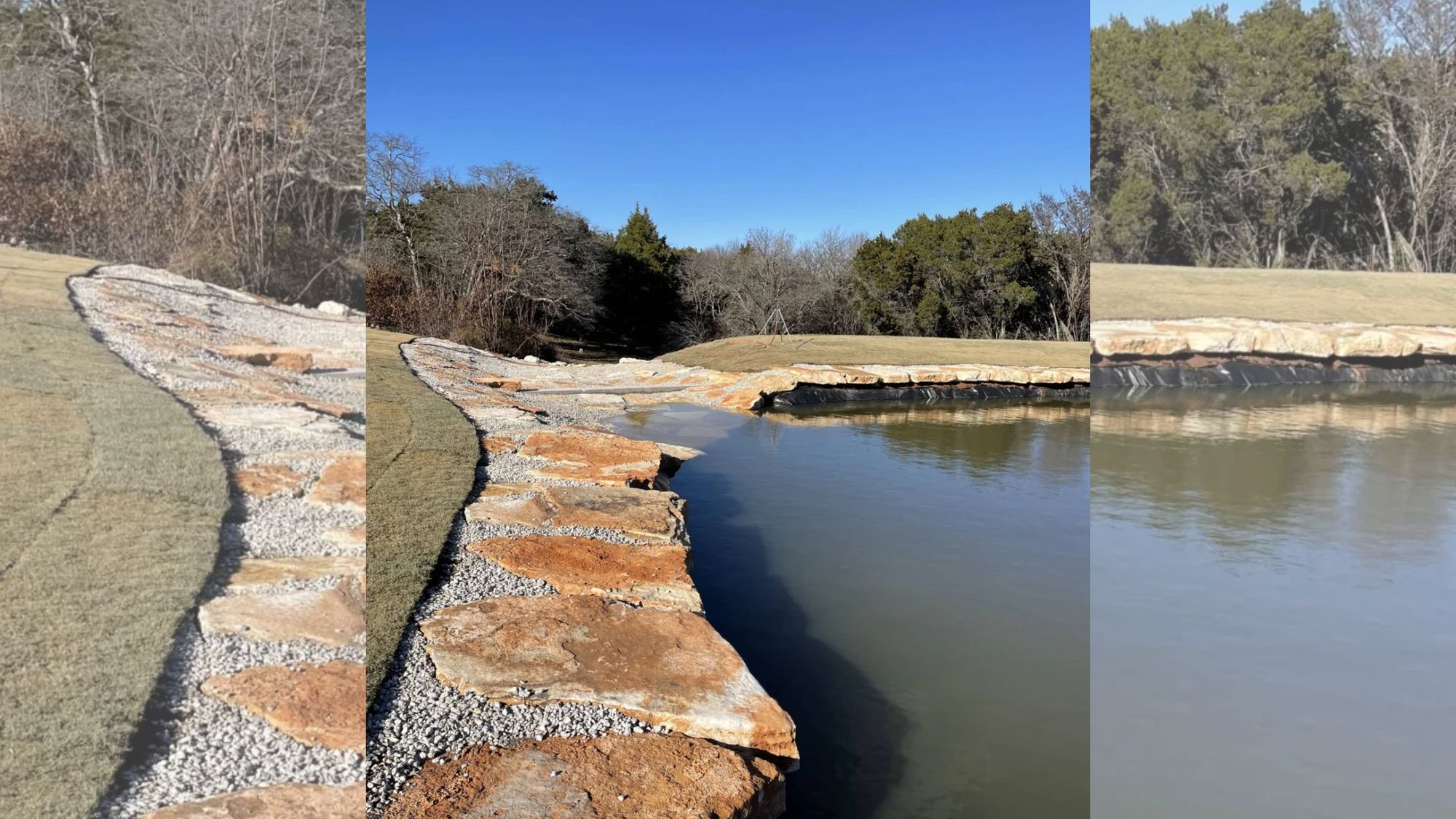
- Liner, where the soil needs one
- Rock border, seeding, and finish work
For a deeper look at site and soil basics, read Mississippi State Extension's guide to choosing a pond location, then see what Wright Construction offers on its pond building page.
Real results help. Amy had an ugly pond on her property. After Wright Construction handled the dirt work, liner, rock border, landscaping, sod, seed, and a T spillway, she called it beautiful in her Google review. And she already had a fountain in mind for next.
How Do You Compare Pond Quotes?
Line them up side by side and read between the lines. A low bid often looks attractive at first glance, but you need to verify what is actually included in the scope of work. Does each bid account for proper soil compaction, engineered slope ratios, an emergency spillway, and a synthetic or clay liner if the natural soil lacks high clay content? Does the estimate cover hydroseeding, silt fencing, or immediate erosion control around the fresh banks to prevent your new dam from washing away during the first heavy rainstorm?
A cheap estimate that leaves out these critical structural elements is not a bargain—it is incomplete and will lead to expensive retrofits later.
Beyond line items, timing and equipment matter just as much. Building a farm or recreational pond requires dry, workable soil to achieve maximum compaction; an experienced, honest contractor will guide you on the ideal season to dig rather than rushing to start in muddy conditions that compromise structural integrity. Make sure to ask for recent local references, verify their general liability insurance, and take the time to speak with past clients about the pond's long-term water retention.
What Next?
Ready to build the right way? Call Wright Construction at 254 417 9969 and ask for a site visit before you ask for a price.